

Overview of 3rd Grade Writing Prompt Worksheets
These free PDF worksheets offer third‑grade students engaging prompts that spark imagination and improve writing skills. They cover narrative, opinion, informational, and creative tasks, with clear spaces for drafting, editing, and reflection. Ideal for classroom or home use. Students share drafts for peer feedback now
Purpose and Educational Value
These third‑grade writing prompt worksheets serve as a versatile tool for developing essential literacy skills. By presenting clear, age‑appropriate scenarios, they encourage students to practice planning, drafting, revising, and editing in a structured yet creative environment. The prompts are designed to foster critical thinking, logical sequencing, and the ability to express ideas coherently, all of which align with early elementary writing objectives.
Teachers and parents can use the worksheets to monitor progress in key areas such as sentence construction, vocabulary expansion, and the use of transition words. The guided prompts also help students learn how to incorporate descriptive details, cause‑effect relationships, and supporting evidence, thereby strengthening their overall writing fluency. Because each sheet contains a variety of genre‑specific tasks, learners gain confidence in handling narrative, opinion, and informational pieces, which prepares them for more complex assignments in later grades.
Additionally, the worksheets promote independent learning by allowing students to self‑check against answer keys and reflect on their own writing choices. This self‑assessment practice builds metacognitive awareness and encourages a growth mindset. In sum, the purpose of these resources is to provide a structured, engaging, and standards‑aligned foundation that supports both classroom instruction and home study, ensuring that every third‑grader has the opportunity to become an effective communicator.
Students learn!!.

PDF Format and Access
Download the free 3rd‑grade writing prompt PDF, fully ready for instant printing or digital sharing. The file is lightweight compatible with browsers most and PDF readers. Teachers can distribute it via email or classroom portals, while parents can print at home for practice. Enjoy.!!!
Downloading and Printing Options
Accessing the 3rd‑grade writing prompt PDF is straightforward and designed for both educators and parents who want to support young writers. The file is hosted on a public educational resource site, ensuring that anyone can click a single link to download the document. Once the download completes, the PDF opens in any standard viewer—whether that’s Adobe Reader, the built‑in viewer on Windows, macOS, or a mobile app on iOS or Android. The layout is optimized for printing, with clear margins, ample line spacing, and distinct sections for each prompt type. Teachers can print a full set for classroom use or provide individual copies to students for homework. For those who prefer a digital approach, the PDF can be shared via email, cloud storage, or a learning management system, allowing students to annotate directly on the document with stylus or touch input. If a teacher wants to customize the prompts, the PDF is also available in editable form (e.g., Word or Google Docs) so that titles, instructions, or answer spaces can be modified before printing. Printing options are flexible: the document can be printed double‑sided to save paper, or single‑sided if the teacher wants to keep a copy of the original for grading. The file size is small—typically under 2 MB—so it downloads quickly even on slower connections. Overall, the download and printing process is user‑friendly, making it easy to integrate these prompts into lesson plans or home study routines. Enjoy the creative journey!

Alignment with Common Core Standards
These worksheets align with Common Core standards for third grade, focusing on writing skills such as crafting clear narratives, expressing opinions, and presenting informational content. They support CCSS.ELA-Literacy.3.RI.1, 3.W.3, and 3.W.4, ensuring students meet grade‑level expectations encourages thoughtful revision!!.

Third‑grade writing worksheets in PDF format are designed to reinforce the Common Core State Standards for English Language Arts The key standards addressed include the Writing strand, where students produce clear, coherent narratives (CCSS.ELA‑Literacy.3.W.3), develop opinions with supporting reasons (CCSS.ELA‑Literacy.3.W.4), and compose informative/explanatory texts that convey facts and details (CCSS.ELA‑Literacy.3.W.5) The worksheets also support the Speaking & Listening strand, encouraging students to present ideas orally respond to peers, which aligns with CCSS.ELA‑Literacy.3.SL.1–3 Reading comprehension standards are reinforced through prompts that require students to analyze text features and use evidence (CCSS.ELA‑Literacy.3.R.1–3) Additionally, the documents promote writing processes such as planning, drafting, revising, editing, and publishing, reflecting the process standards (CCSS.ELA‑Literacy.3.W.6–8) By integrating these standards into engaging, genre‑specific activities, the PDFs provide a comprehensive, standards‑aligned resource that teachers and parents can use to support third‑grade writers’ growth in both classroom and home settings The worksheets incorporate targeted practice in sentence structure, correct capitalization, and punctuation, ensuring students meet CCSS.ELA‑Literacy.3.L.1–3 They also include answer keys that explicitly reference the relevant standards, allowing educators to assess mastery and provide targeted feedback Each worksheet contains a brief instruction section that guides students through the writing process, followed by a prompt that invites creative thinking After drafting, students are prompted to revise for clarity and coherence, then edit for grammar and mechanics The answer key provides model responses and explanations tied to the standards, allowing teachers to review student work efficiently Students can download, print, and use the worksheets at home or in the classroom, making it easy to integrate into daily lessons or homework assignments Free PDF

Types of Writing Prompts Covered
Our free PDF set offers four main prompt types: narrative stories that spark imagination, opinion pieces encouraging viewpoint expression, informational essays that build research skills, and creative challenges that blend genre play. Each prompt includes guiding questions and space for drafting. and review now.
Narrative, Opinion, Informational, and Creative Prompts
These free PDF worksheets give third‑grade students a balanced set of writing tasks. Each sheet offers a clear prompt that invites exploration of story, viewpoint, facts, or imagination. The design encourages students to plan, draft, edit, and reflect in a structured way.
- Narrative: Write a story with a beginning, middle, and end, using vivid details and dialogue to bring characters to life.
- Opinion: State a clear viewpoint on a familiar topic, support it with reasons, and consider counterarguments respectfully.
- Informational: Explain a concept or describe a process, organizing facts logically with headings or simple paragraphs.
- Creative: Experiment with genre—mystery, fantasy, or “what if”—letting imagination guide structure and language.
Guiding questions accompany each prompt, helping students brainstorm, structure, and revise. A reflection box lets learners note what they learned about their own writing habits and how to apply new strategies. Teachers can use the answer keys to assess grammar, punctuation, and organization, giving feedback that reinforces objectives. Parents can review completed sheets to discuss narrative techniques or identify areas needing support, transition words or consistent tense.
Because the PDFs are free and printable, educators can quickly adapt prompts to fit lesson plans or homework, ensuring engaging, standards‑aligned practice. In the classroom, worksheets serve as warm‑up activities, independent tasks, or group projects where students collaborate on a shared narrative. The prompts also support cross‑curriculum integration, linking science or social studies topics to informational or narrative writing. Students benefit from the structured format, reducing cognitive load and allowing focus on creativity and content. The reflection section promotes metacognition, prompting learners to think about their writing process, set goals, and track progress over time. Also learn to self‑edit, improving clarity and coherence over successive drafts. for peer review. and teacher guidance!

Worksheet Design Features
These PDFs feature clear sections for planning, drafting, editing, and reflection. Each prompt includes guiding questions, space for sentences, and a checklist for capitalization, punctuation, and sentence structure. Visual cues aid focus, and answer keys support assessment.
Color sections to track progress!

Sentence Structure, Capitalization, and Punctuation Practice
These third‑grade worksheets emphasize the fundamentals of clear, correct writing. Each prompt begins with a short, engaging scenario that encourages students to think about how to organize their ideas. A dedicated planning area prompts the writer to list main points, supporting details, and a concluding thought, helping them build logical flow. The drafting section then asks students to compose full sentences, with a focus on subject‑verb agreement, proper verb tense, and varied sentence length. Students practice combining simple sentences into compound and complex structures using coordinating and subordinating conjunctions. Capitalization practice is woven throughout: titles, proper nouns, and the first word of each sentence are highlighted for correction. Punctuation drills include commas, periods, question marks, exclamation points, and quotation marks. Each worksheet contains a “check‑list” that reminds students to review capitalization and punctuation before submitting. Teachers can use the built‑in answer key to quickly assess accuracy and provide targeted feedback. Parents can reinforce these skills at home by reviewing the checklist together, encouraging the child to self‑edit. The design also incorporates color‑coded sections—blue for planning, green for drafting, and red for editing—to visually cue the writing stages. This structure supports differentiated instruction, allowing teachers to assign worksheets at varying difficulty levels and track progress over time; The printable format ensures accessibility for both classroom and home use, and the PDF can be downloaded, printed, or shared digitally. By integrating sentence structure, capitalization, and punctuation practice into engaging prompts, these worksheets help students build confidence and competence in writing, aligning with Common Core expectations for third grade. Teachers can adapt prompts for individual learning goals. Enjoy practicing with!

Answer Keys and Assessment Support
Answer keys accompany each PDF prompt, offering correct sentences, punctuation, and structure checks. Teachers can use them to grade quickly, highlight errors, and give targeted feedback. Parents can review with kids, reinforcing learning and tracking progress. Use the key to monitor growth and adjust lessons!!
How to Use the Answer Keys Effectively
Answer keys are more than a grading tool; they serve as a scaffold for reflective learning. Begin by reviewing the key with students before they submit work, so they understand the criteria for success. Highlight examples of correct punctuation, capitalization, and sentence structure, then ask students to compare their drafts to the model. This comparison encourages metacognition and helps students identify specific areas for improvement. After the comparison, have students rewrite or edit their drafts, using the key as a checklist. Teachers can then circulate the edited pieces, offering individualized feedback that points to the exact standard that was met or missed. For home use, parents can print the key and work with their child to fill in a short reflection: “What did I do well?” and “What will I try next time?” This reflection reinforces the learning. When grading, use the key to assign a rubric score that aligns with Common Core expectations, ensuring consistency across students. Finally, store completed answer sheets in a portfolio for longitudinal assessment, allowing educators to track growth over the school year and adjust instruction accordingly. By integrating the key into every step—preview, draft, edit, and reflect—students develop a deeper understanding of writing mechanics and become independent writers. Teachers can also use the answer key to create a formative quiz, turning the key into a review activity that reinforces the same standards in a setting. Additionally, the key supports differentiated instruction; by highlighting common errors, teachers can group students for mini‑lessons, ensuring that each learner receives practice tailored to their needs.

Practical Use in Classroom and Home Settings
These printable PDFs fit into daily lessons or home assignments. Teachers can assign a prompt, have students draft, then peer‑review using the answer key. Parents can print sheets, set a quiet writing time, and discuss the story’s main idea. This dual setting reinforces skills and confidence. Share drafts online.!!
Lesson Planning and Parent Engagement Strategies
Teachers can weave the free PDF prompts into a 45‑minute lesson cycle: start with a quick modeling of narrative structure, then hand out the worksheets, allow 10 minutes of drafting, followed by a peer‑review session and a self‑editing round using the answer key. This “write‑share‑revise” loop reinforces feedback and self‑assessment.
Parents can join by printing a prompt, setting a 10‑minute “home writing hour,” and asking their child to explain the story’s main idea. Prompt them with open‑ended questions such as, “What would happen if the character changed their decision?” or “How does the setting influence the plot?” These questions sharpen critical thinking and help parents gauge comprehension.
Both teachers and parents should maintain a shared digital folder (Google Drive, OneDrive, or a class website) where completed worksheets can be uploaded. This allows teachers to track progress and parents to see drafts in real time. Use the answer key to provide individualized feedback, highlighting strengths in sentence structure, capitalization, and punctuation.
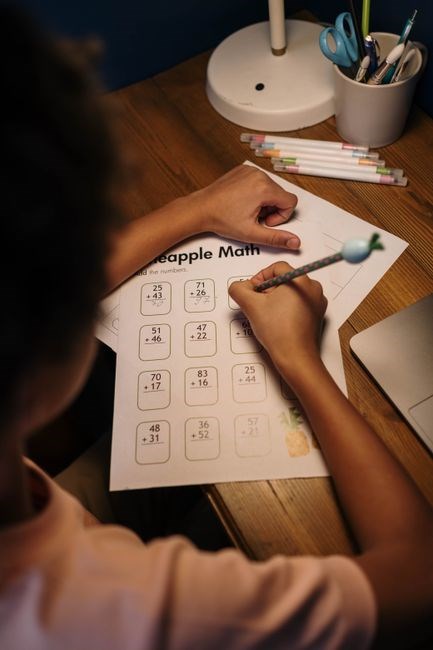
Incorporate a “writing showcase” at the end of the unit: students read aloud their polished pieces, and parents vote on categories like “most creative” or “best use of descriptive language.” This celebration boosts confidence and encourages ongoing practice.
Schedule a brief “reflection” session where students write a sentence about what they learned from the prompt. Parents can review these reflections to identify areas needing extra support or enrichment. Offer optional extension activities such as a “story map” graphic organizer or a “character diary” entry to deepen engagement.
Finally, circulate a short newsletter to parents that outlines the week’s prompt theme, provides a quick guide on how to scaffold writing at home, and invites parents to share their child’s favorite part of the prompt. This keeps the home–school partnership strong and ensures that every student receives consistent encouragement and feedback across settings.